
You pack your workout clothes with good intentions. Then the flight runs late, the hotel gym turns out to be one treadmill and a missing dumbbell, and the training session you planned never happens. Travel has a way of making a familiar routine surprisingly difficult.
Portable workout equipment gives you another option. It won't make every room a gym, and it doesn't remove the need for a suitable setup. But it can help you keep a manageable version of your routine when your usual equipment isn't available.
The useful question isn't, “How do I recreate my entire gym while I'm away?” It's, “What can I realistically do with the time, equipment, and space I have?” That's where a thoughtful travel workout starts.
What Makes Portable Fitness Equipment Useful?
Small equipment is only useful if you can train with it once you arrive. A compact bag means little if the exercises require a mounting point your accommodation doesn't have or a setup you haven't learned to use.
Start with practicality. Consider the equipment's packed dimensions and weight, the space needed during exercise, and any anchoring requirements. Think about how long setup takes and whether you're comfortable handling every component yourself.
Also consider your habits. If you normally train with a short, familiar routine, a travel kit that supports those movements may be more useful than one that offers dozens of exercises you'll never practice. Portability should reduce friction, not introduce a complicated project at the end of a long day.
Where the TGrip Maxx Kit Fits
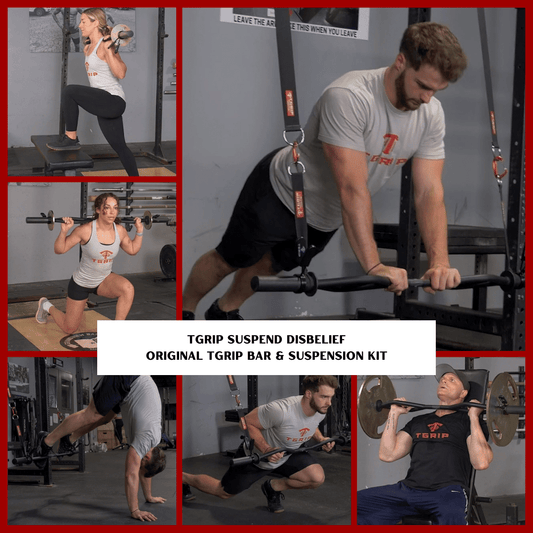
The TGrip Maxx Kit is an option to explore when comparing portable resistance-training equipment. Review its current contents, specifications, and setup instructions to decide whether it supports the exercises you want to perform.
Don't assume a resistance-band kit works exactly like a cable weight stack. Bands provide a different resistance experience, and the exercise setup matters. A familiar-looking handle doesn't make the systems interchangeable.
Before taking any kit on a trip, unpack it at home and learn the approved configurations. Confirm what needs an anchor, what can be used without one, and how to inspect the components. Your first attempt at assembly shouldn't happen five minutes before a meeting.
Our guide to the TGrip Maxx Kit and home-gym cable systems provides related reading. Use the product instructions as the reference for installation and intended use.
Choose Your Workout Space Before Choosing the Exercise
“Workout anywhere” is a useful idea, but it isn't permission to train in every available corner. You still need stable footing, clear space, and equipment positioned according to its instructions.
In a hotel room, check for furniture, slippery surfaces, low ceilings, and people who might enter the area. Outdoors, consider the ground, weather, public access, and whether the equipment is intended for those conditions. Keep bands away from sharp edges and rough surfaces that could damage them.
Never assume a door, railing, chair, or decorative fixture is a suitable anchor. Use only the mounting arrangements allowed by the manufacturer. If the space doesn't support an approved setup, choose another exercise or another location rather than improvising.
Resistance Bands: Learn the Feel Before Increasing the Challenge
Bands can offer a convenient training option, but their resistance changes as they stretch. An exercise that feels light at the beginning may become much harder near the finish.
Choose resistance that lets you control the entire intended movement. Don't judge it only by the first few inches. If you have to twist, rush, or shorten every repetition to finish, the setup or resistance may need adjusting.
Follow the manufacturer's limits on stretching and combining components. Don't keep stepping farther away from an anchor simply to make the exercise harder. Stay within the approved configuration and select another appropriate resistance option when needed.
Inspect bands and connection points before every session. Cracks, tears, damaged clips, or loose components are reasons to stop using the equipment and seek replacement guidance. A quick inspection is worth making part of the routine.
Build a Simple Travel Workout Around Familiar Movements
You don't need an entirely new program because you're away from home. Start with movements you already understand and adapt only where the equipment and approved setup allow.
Think in broad categories: a lower-body movement, a push, a pull, and an exercise that challenges torso control. Those categories can help you avoid doing only the movements that happen to be easiest to set up.
A bodyweight squat to a suitable, stable target might cover the lower-body category. A wall push-up may be a manageable pushing option. An approved band-row setup could supply a pull, while an appropriate bodyweight exercise could address torso control. These are examples to evaluate, not a required circuit or a claim that every kit supports every movement.
Choose versions that match your ability and surroundings. If you don't have a secure pulling setup, don't invent one to complete a checklist. A shorter session with suitable exercises is the better decision.
Make the Session Fit the Day
A travel workout needs to survive contact with your schedule. If you only have a short window, reduce the exercise selection rather than rushing through a full gym session.
Allow time for comfortable warm-up movement and easier practice repetitions. Then work through your chosen exercises at a pace that lets you maintain technique. Rest enough to keep the next set controlled rather than treating every pause as wasted time.
On a demanding travel day, a lighter session may be more appropriate than a hard workout. On another day, walking or taking a break may be the sensible choice. Flexibility is part of consistency, not evidence that your routine has failed.
Grip Choice Matters, Without the Complicated Language
Terms like “biomechanical optimization” can make equipment selection sound more mysterious than it needs to be. In practice, you're considering how your hands, body position, resistance, and exercise path work together.
A neutral grip places your palms facing each other. Other grips position them differently. Some people prefer one option for certain movements, but no hand position is automatically right for everyone.
Pay attention to the whole repetition. Can you maintain a secure hold? Can you keep your wrists in a manageable position? Does the setup allow the movement without forcing an uncomfortable path?
TGrip Fitness grip options belong in that practical discussion. They don't replace appropriate exercise selection or guarantee pain-free training. Our guide to neutral-grip bars and elbow comfort offers related equipment considerations.
Track Progress Without Pretending Every Setup Is Identical
Record the exercise, band or resistance choice, approved setup, and repetitions. Note how the session felt. That gives you something useful to return to on your next trip.
Comparisons only help when the conditions are reasonably consistent. A different band length or anchor position may change the exercise substantially, even if the handle looks the same. Don't treat band labels as exact equivalents of the weights you use at home.
Progress might mean steadier repetitions, another manageable set, or a more consistent training habit. You don't have to force a bigger resistance challenge every session to make the workout worthwhile.
Pack Thoughtfully and Check Travel Requirements
Confirm packed dimensions and weight against your luggage allowance before deciding where the equipment will go. Check current airline and security requirements for the items you're bringing, particularly rigid components or accessories. Don't assume every workout kit is automatically accepted in carry-on baggage.
Pack components so they won't be damaged by sharp objects or crushing. Once you arrive, inspect them again and make sure you have the instructions available. Knowing how to set up at home doesn't mean every room offers the same suitable conditions.
Keep Comfort and Recovery in the Picture
Travel can change your sleep, meals, and energy. Start with a manageable session rather than trying to compensate for missed workouts all at once.
Stop an exercise if it causes sharp, sudden, or persistent pain. A lighter band or different grip isn't a substitute for assessment when symptoms keep returning. Seek qualified healthcare guidance for ongoing concerns, and use a trainer's help when you need exercise instruction.
Bring a Useful Option, Not Another Obligation
The best portable workout equipment is equipment you can transport, set up appropriately, and use consistently. It should help you adapt your training rather than make travel feel like a test of discipline.
If the TGrip Maxx Kit fits your needs, learn the setup before you leave and plan a few familiar movements. Keep the session manageable, respect the available space, and build from what the day allows. That's a more useful travel-training strategy than waiting for perfect gym conditions.