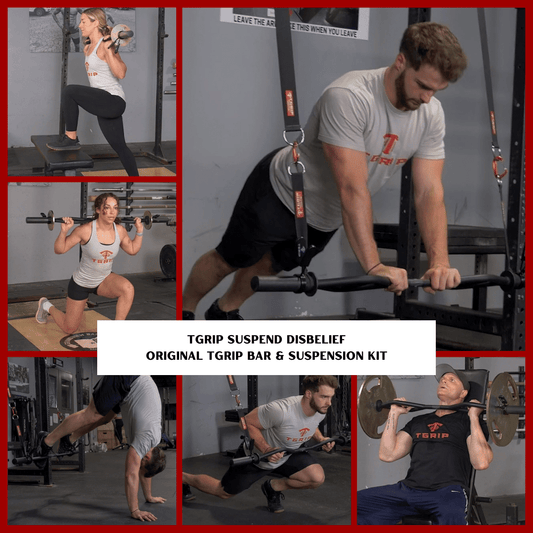

You don't always need another reminder to exercise. Sometimes you need a workout that fits the day you actually have. Maybe you're traveling, sharing a small living space, or trying to train between work and family commitments. Those are practical challenges, not character flaws.
Portable workout equipment can help you adapt, but the useful part isn't simply being able to carry it. It's knowing how to turn that equipment into a session you can set up appropriately and repeat consistently.
Ergonomic training anywhere brings those ideas together: choose movements that suit you, use manageable resistance, and pay attention to how the equipment fits your body and surroundings. At TGrip Fitness, that's a more useful starting point than promising that one tool replaces every gym.
What Ergonomic Training Means Outside the Gym
Ergonomic training considers the relationship between your body, the equipment, and the task. In a workout, that includes your grip, starting position, resistance, available space, and how you move through each repetition.
It doesn't mean every exercise should feel effortless. Strength training needs an appropriate challenge. The aim is to avoid unnecessary setup problems that distract from the movement you're trying to perform.
For example, a handle may feel comfortable in your hands but still be unsuitable if the connection point limits the exercise. A band may be easy to transport but too demanding near the end of a movement. A room may have enough floor space but no approved anchoring option.
Thinking through those details makes portable training more practical. The equipment and the environment need to work together, not just look convenient separately.
Start With Your Training Priorities
Before choosing a portable fitness kit, think about what you want your workouts to accomplish. Maintaining a familiar routine during a trip is different from building a home-gym program around new equipment.
List the movement patterns you regularly train. You might want a lower-body exercise, a pushing movement, a pulling movement, and a suitable exercise for torso control. You don't need every category in every short session, but a broader plan helps you avoid doing only curls because they're easy to set up.
Choose familiar versions first. Learning unfamiliar equipment and several unfamiliar exercises at the same time makes it harder to judge what is working. If you need instruction, practice with a qualified trainer before relying on the routine away from home.
Where the TGrip Maxx Handle Fits
The TGrip Maxx Handle is an option to explore when comparing portable training handles. Review the current product details, intended uses, connection requirements, and dimensions against the equipment you plan to use.
If you're considering a bundled setup, compare the current contents and instructions for the TGrip Maxx Kit. Don't assume a handle, band, suspension system, and cable machine can be connected interchangeably simply because their hardware appears to fit.
Choose a product because it supports the exercises you want to perform in an approved setup. You don't need to demonstrate every possible use in one workout. A small number of useful movements can make the equipment worthwhile.
Grip Choice and Joint-Friendly Strength Training
A neutral grip places your palms facing each other. Other handles allow palms-up, palms-down, or angled positions. These choices can influence how a movement feels at the wrists, elbows, and shoulders.
Some people prefer a neutral grip for certain exercises. Others do better with another position. Handle spacing, grip thickness, and the exercise itself also matter, so the label alone doesn't determine whether the setup suits you.
Try manageable resistance and evaluate the whole repetition. Can you keep a secure hold? Can you control the return? Are you forcing your wrists or changing your posture just to finish?
Joint-friendly strength training involves those decisions alongside workload and recovery. No grip guarantees pain-free exercise, treats an injury, or eliminates injury risk. Persistent symptoms need appropriate professional guidance rather than another equipment experiment.
Training at Home: Build a Repeatable Setup
At home, consistency can be an advantage. You can measure your available space, learn where the equipment belongs, and establish a routine without rebuilding the arrangement every session.
Keep the area clear enough for the full movement and a controlled finish. Consider pets, children, furniture, ceiling height, and anyone who might walk into the training space.
For exercises requiring an anchor, use only the arrangements allowed by the manufacturer. A door, post, or piece of furniture isn't suitable simply because it looks sturdy. If you don't have an approved mounting option, choose a different exercise rather than improvising.
Our guide to home-gym cable systems and the TGrip Maxx setup offers related reading. Remember that resistance bands and cable weight stacks provide different resistance experiences and require their own setup decisions.
Training Outdoors: Let the Location Guide the Session
An outdoor workout can be a welcome change, but the setting deserves a closer look before you unpack. Check the ground for stability, slippery areas, sharp objects, and enough clearance around you.
Follow any site rules and consider other people using the space. Public structures aren't automatically exercise anchors. Use equipment only in the conditions and configurations permitted by its manufacturer.
Keep bands away from abrasive surfaces and sharp edges. If the weather or location doesn't support the planned workout, adapt the session. A walk and a different training opportunity later may be more sensible than forcing an unsuitable arrangement.
Training While Traveling: Simplify Rather Than Duplicate
A travel workout doesn't need to recreate your usual gym session. Start with what the space and equipment support, then choose a manageable selection of familiar movements.
One day that might mean bodyweight work and an approved band exercise. Another day a suitable gym cable station may give you more options. You don't need identical workouts everywhere to maintain a useful habit.
Check packed dimensions and weight before choosing luggage, and confirm current travel requirements for the items you're bringing. Practice setup before departure so you know what conditions you need when you arrive.
Give yourself a realistic window for warming up, training, resting, and putting the equipment away. An advertised workout duration doesn't help if it ignores half the work involved.
A Practical Portable-Workout Framework
Begin with comfortable movement and easier practice repetitions. Then choose a few exercises that fit your ability and approved setup. You might combine a manageable lower-body movement, a push, and a pull, depending on what is available.
A bodyweight squat, wall push-up, and appropriately configured resistance-band row are examples to evaluate, not a mandatory circuit. They don't all require the same equipment, and a particular kit may not support every variation.
Use resistance that lets you control each exercise from start to finish. Rest enough that the next set remains purposeful. If the session is short, reduce the exercise selection rather than racing through more work with deteriorating technique.
Your appropriate sets, repetitions, and frequency depend on your experience and broader program. A trainer can help establish a starting workload instead of asking you to copy a generic high-volume circuit.
Apply Progressive Resistance Training Thoughtfully
Portable workouts can include progression. Keep a record of the exercise, resistance, repetitions, and relevant setup details. With bands, note the approved arrangement as well as the band used.
Band resistance generally increases as the band stretches, while progressive overload describes how training demands change over time. Those are related ideas, but they aren't the same thing.
Progress might mean an additional controlled repetition, a more consistent movement, or an appropriate resistance increase. Change one variable at a time where practical. Don't make a band exercise harder by exceeding its permitted stretch or using an unsuitable anchor position.
Different setups aren't always directly comparable. A new connection height or band length may change the movement substantially, even when the handle stays the same.
Recovery Matters Even When the Equipment Is Portable
A light-looking kit can still produce a demanding workout. Additional band sets count toward your training workload, and a short session isn't automatically a recovery session.
Consider the full week, including other exercise, work demands, sleep, and travel fatigue. If performance keeps slipping, review the plan before adding intensity.
For strength training after 40 or 50, these principles remain useful, but age alone doesn't determine the right routine. Current ability, health, experience, and recovery should guide your choices. You don't need to match someone else's workout to make worthwhile progress.
Inspect the Equipment and Know When to Stop
Check bands, handles, connectors, and attachment points before use. Damaged components, clips that don't close fully, and uncertain mounting arrangements are reasons to stop and follow the manufacturer's guidance.
Stop an exercise for sharp, sudden, or persistent pain. Seek qualified healthcare advice for recurring symptoms, and follow your treating clinician's restrictions if you're recovering from an injury or surgery.
Ergonomic equipment isn't a substitute for rehabilitation. Its role is to provide options you can evaluate as part of an appropriate training plan.
Make Training More Adaptable, Not More Complicated
The best workout-anywhere approach isn't about proving you can train in every location. It's about recognizing which opportunities are suitable and having a manageable plan when they are.
If the TGrip Maxx Kit fits your needs, learn the setup, choose a few useful movements, and build consistency before adding complexity. TGrip Fitness equipment can travel with you, but thoughtful choices are what turn portable equipment into purposeful training.