
You don't need a garage full of equipment to train seriously at home. Most of what people buy in that first excited Amazon spree ends up as a coat rack. Here's what actually earns a spot in a small home gym.
A Bar You Can Do Everything With
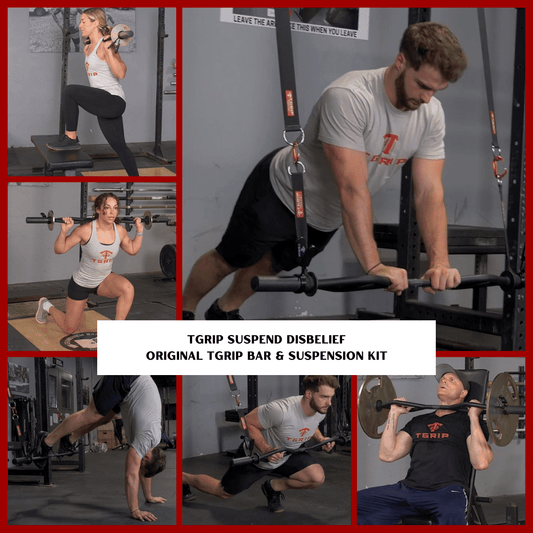
If you're only getting one piece of equipment, make it a TGrip Bar. The patented angled grip keeps your wrists, elbows, and shoulders in a neutral position instead of the locked-in twist of a straight bar, so you can press, row, curl, and squat without your joints paying the price. The Tgrip Shorty is the compact starting point if space is tight; Pro Series and Club Strength Bars step up in length and load capacity as you progress.
A Tgrip Maxx Handle for Variety
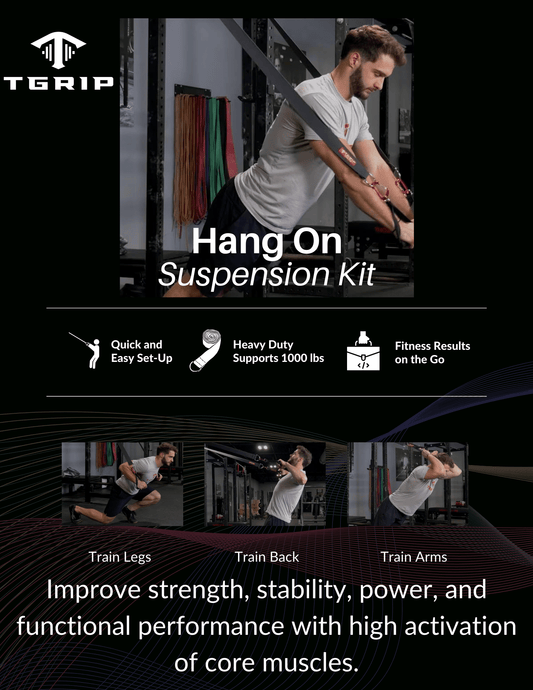
This is the cheapest way to add real training variety to a small setup. The Tgrip Maxx handle ($49) works with resistance bands, a suspension anchor, or a cable pulley kit, and it carries the same patented grip as the bars, rated to 150 lbs. Pair it with a set of bands — the full Maxx Kit ($159) — and you've effectively got a cable station that fits in a drawer. See our cable pulley system guide for details.
Weight Plates That Match Your Bar
A modest set of plates — enough to load your bar to a challenging working weight — does more for you than a rack of dumbbells you'll outgrow in a month. Buy plates once, add more as you get stronger.
A Few Accessories, Not a Shopping List
A mat to protect your floor, maybe a set of gym straps for pull-focused work. That's it. Resist the urge to fill out the rest of the room on day one — you'll know what you're actually missing after a few months of real training, not before.
Start with the bar, add the plates, layer in the Maxx handle when you want more variety. That's a complete home gym, not a half-finished one.
Ready to go bigger? Our building a serious garage gym guide covers the next step up.