
Ergonomic Strength Training: A Smarter Way to Build Strength for Life
Getting stronger is satisfying. So is being able to keep doing the training you enjoy, year after year.
If you’ve spent time lifting, you’ve probably noticed that the same exercise can feel very different depending on the equipment. A small change in grip or hand position can turn an awkward movement into one that feels more comfortable.
That observation is at the heart of ergonomic strength training. Rather than expecting every lifter to adapt to the same fixed position, it asks how equipment and exercise choices can better fit the person using them.
At TGrip Fitness, that’s how we think about building strength for life.
What is ergonomic strength training?
Ergonomic strength training considers how your wrists, elbows, shoulders, and the rest of your body move during resistance exercise. Grip angle, hand position, range of motion, and equipment design all play a part.
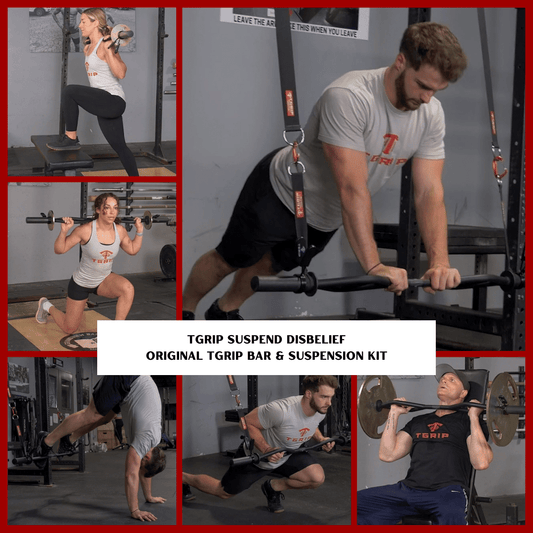
Take a straight barbell. It determines where your hands sit and influences how you position your arms. For plenty of lifters and exercises, that works well. But it isn’t the only option, and it doesn’t have to be your choice for every movement.
The useful question is, how can you train the movement effectively in a position that suits you?
The goal isn’t to take the effort out of strength training. It’s to be more thoughtful about where that effort goes.
Why grip position matters in strength training
Hand position affects how you perform presses, rows, curls, and pull-ups. Change your grip, and you may notice a difference in how your wrists, elbows, and shoulders move through the exercise.
A neutral grip, with your palms facing one another, gives you a different option from an overhand or underhand grip. It may feel more comfortable for some movements and some lifters. That doesn’t make it the right answer for everyone.
There is no universally perfect grip. The point of ergonomic training is to have options and pay attention to which ones work for you.
Straight barbells, dumbbells, machines, and cables all have a place. You don’t need to abandon familiar equipment to question whether a different grip or setup might suit a particular exercise better.
What to look for in ergonomic strength equipment
We think about ergonomics when choosing a chair or a hand tool. It deserves consideration when choosing strength equipment, too.
Look beyond how much weight a piece of equipment can hold. Think about how you’ll interact with it during a set:
- Do the hand positions feel comfortable for the movement?
- Do you have grip options rather than one fixed position?
- Can you use a range of motion you can control?
- Does the setup suit your body and the exercise you want to perform?
- Can you maintain stability and control as you train?
That’s what we mean by ergonomic strength equipment designed for training longevity: equipment developed with the lifter’s experience in mind, not just the weight on the bar.
Joint-friendly strength training doesn’t mean avoiding effort.
“Joint-friendly” shouldn’t be confused with effortless. You can challenge yourself while being thoughtful about technique, exercise selection, and how a movement feels.
This isn’t an approach reserved for older lifters or people returning from an injury. It’s relevant to anyone who wants training to remain part of their life.
The aim isn’t to find a piece of equipment that lets you ignore discomfort. It’s to make sensible choices about your setup, training load, and recovery rather than treating every uncomfortable repetition as something to push through.
Training longevity: look beyond your next personal best.
How much can you bench? How much can you squat? How many pull-ups can you do? Those are useful ways to track progress, but they aren’t the whole picture.
It’s also worth asking: can you keep showing up and doing the training that matters to you?
Training longevity means thinking beyond this week’s numbers. Your exercise choices, recovery, and expectations may change over time. A sustainable approach leaves room for those changes without losing sight of getting stronger.
At TGrip, we believe strength and long-term participation belong in the same conversation.
Why TGrip focuses on ergonomic equipment design
TGrip began with a question about how traditional equipment interacted with the body. Experimenting with different grip positions showed how much a change in hand position could affect the feel of a familiar exercise.
That became a broader design philosophy. Instead of asking how to make another version of an existing bar, we ask how the equipment should interact with the person lifting it.
That question guides our approach to bars, handles, attachments, and the products we continue to develop.
TGrip equipment isn’t intended to replace every tool in your gym. It gives you another option when your current equipment doesn’t offer the grip, movement, or alignment you’re looking for.
Equipment is one part of a sustainable training routine.
Thoughtful equipment design matters, but it can’t do the training for you. How you move, manage your workouts, and recover matters, too.
That’s why our philosophy extends beyond individual products into what we call the TGrip Ergonomic Training & Lifestyle Protocol.
The idea is simple: build strength with the rest of your life in mind. Movement, strength, mobility, recovery, nutrition, joint health, and consistency belong in the same conversation.
If you want to stay active at 40, 50, 60, 70, and beyond, your approach needs room to evolve with you. It’s not just about finding a workout. It’s about building habits you can keep adapting.
Train with your body, not against it.
You can train hard without making punishment the point of the workout. Challenge yourself, pay attention to how you move, and choose equipment that gives you useful options.
Adjust when a movement doesn’t feel right. Take recovery seriously. Think about the strength you want to build now and the training you want to keep doing years from now.
That’s ergonomic strength training, and it’s the philosophy behind TGrip Fitness: build strength with a long-term view.